Diary of a GP 28: Notes from a Sinking Ship

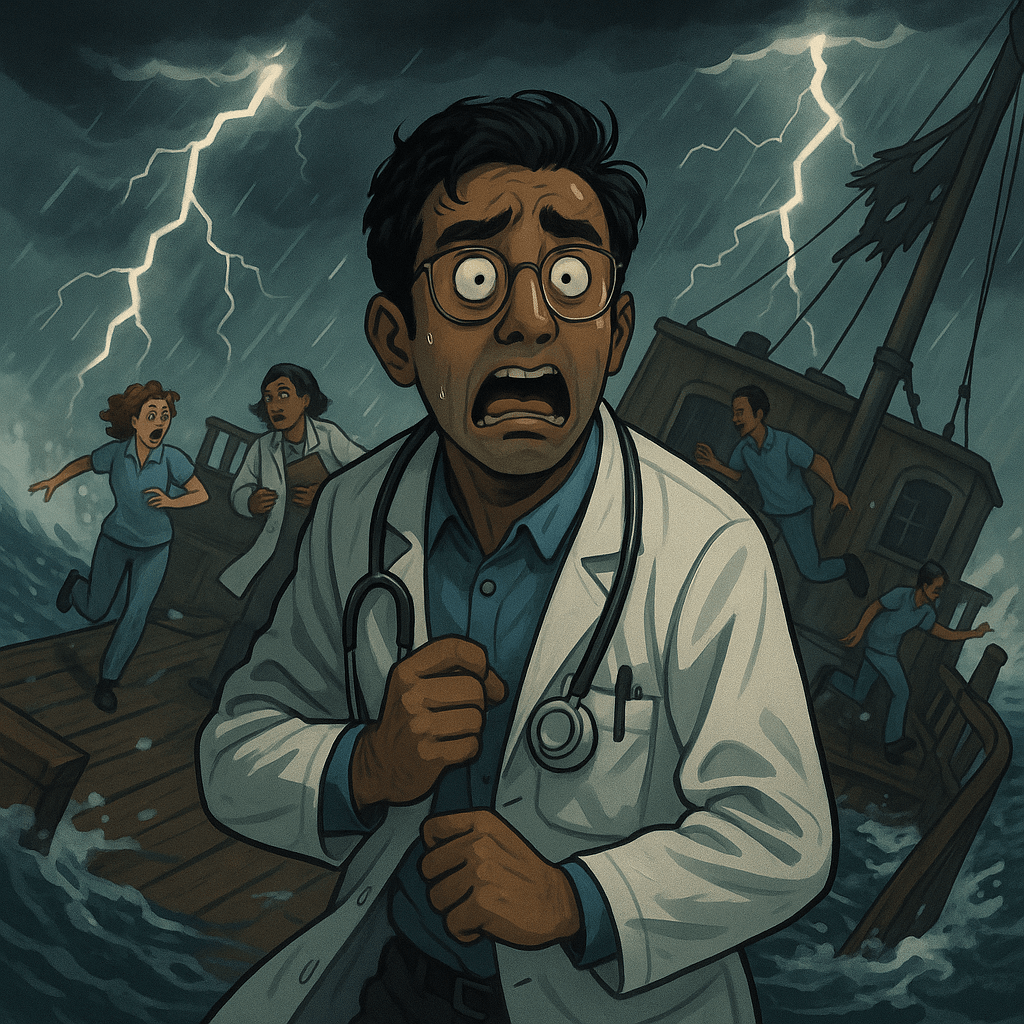
Since I handed in my resignation, Claire (our HCA) decided to retire and left last week, three receptionists are heading off to uni, and Jane — one of the key clerical staff — is leaving too. All within a month. I’m out in two weeks. No replacements have been lined up. “It’s like rats leaving a sinking ship,” Jamie muttered.

It’s a bit sad, to be honest. Feels like the inevitable is finally coming for this place. We actually had a patient survey recently — 95% said their experience here was good or very good, which is worlds apart from when we started. Although I know that’s definitely an overstatement for how good we really are, things have got better. But it came at a cost. Burnout and stress amidst the usual silence from above. Still can’t get broken equipment replaced, contracts for staff or make any decisions. It’s all feeling very wobbly. And with no one coming in to replace me or the other 5 staff leaving, it looks like it’s about to collapse.

A Day in Clinic

This morning I see Roman, 28, with vomiting for 2-3 days. I assume it’s gastroenteritis, but he’s got upper abdominal pain and bilious vomit, with a bit of blood. Probably a Mallory-Weiss tear from all the retching. The veins lining the food pipe near the stomach rupture with continuous vomiting and it looks scary for patients but it generally settles. But he’s tender in the right upper abdomen and his breath catches when he takes a deep breath in and his gallbladder presses against my examining fingers — Murphy’s sign is positive. He is in pain when I ask him to jump up and down meaning there’s significant inflammation in the tummy. All this suggests he may have a nasty bout of cholecystitis, a gallbladder infection. Not what I expected in someone his age. I send him to the surgeons.

Then I see an infected boil, a hyperthyroid patient, and a couple of folks Western medicine can’t do much for, so I suggest exploring alternative healthcare perspectives.

Then there’s Dillon.

Dillon’s a sex offender who was released from prison a few years ago after a four-year stretch. He’s got a short fuse, punches walls or the steering wheel when he’s overwhelmed. His partner wants him to get help as he is hard to be around. He’s the first to admit it and wants to be a better version of himself earnestly. He’s not violent to her, but he says he feels numb all the time — except when rage takes over. He’s waiting on an ADHD diagnosis.

He could easily be portrayed as a monster. When I ask him about his past, he says his childhood was fine. No trauma.

But when I dig, he was raised by his mum alone, raising four kids alone. He never met his dad. Then he tells me he was bullied throughout school. He was full of rage, he says. Didn’t know why. He suppressed it until he was a young adult.

It’s interesting how people don’t always realise they’ve had a difficult start. He believed he never had overt trauma but he clearly had a hard time growing up. If you’ve never known stability, you don’t know it’s missing. No father figure, bullied every day — of course that leaves a mark. No grounding. No one to mirror healthy masculinity or teach how to deal with anger. That stuff gets buried until it explodes.

Offering Something

A lot of these guys can’t access mental health services, so I try to offer something. I mention a running app — Couch to 5Km, something free they can do with headphones to get them exercising.

I suggest finding community — like the local men’s shed that teaches woodwork. And hobbies. Hobbies help bring you into a state of flow — away from your thoughts, into your body, into something that feels safe.

And I always mention one of my favourite Gandhi quotes: The best way to find yourself is to lose yourself in the service of others. I say, “Just help someone. In a small way.” Dillon tells me he’s going to bake cakes for his neighbours this weekend. Not what I expected him to say, but that’ll do.

On “Evil”

It made me think back to my yoga teacher training — where I learnt that in Sanskrit, there’s no word for “evil” in the way we use it in English. The concept of “evil” is more nuanced and context-dependent, often understood not as a cosmic battle between good and evil, but as a matter of ignorance, imbalance, or disconnection from dharma (one’s personal duty in society based on what’s needed and one’s interests, skills and talents i.e. one’s raison d’etre). Then there’s adharma, which means going against your nature or purpose and the butterfly effect that can come from that. ‘Something’s missing,’ or frustration and irritation you don’t understand. It builds up. There’s no cosmic stamp of “evil” on a person. No irreversible branding. If you are clasped in the unyielding hold of destitution, it’s very hard to even begin knowing what your dharma is. Your primary concerns are safety, food and shelter.

That really stuck with me. Most of the so-called “bad people” I meet are just scared, stuck, or broken in ways that no one ever helped them mend. They develop coping mechanisms which damage themselves and sometimes others. That doesn’t mean they shouldn’t be held accountable — but it does mean they’re still human.

And Finally, Ashmita

A bit later, I have a call with Ashmita, our clinical director. She’s one of the good ones — a GP trying to bridge the gap between the ground and the execs, who mostly operate on another planet. I wanted to speak to her about risk mitigation plans for when I leave, to get ahead of the looming staffing crisis. But before we even get there, she tells me she’s resigned. She spent the last 3 days crying and then came to a decision. She finally handed it in yesterday and feels relieved. She said her value of integrity had been challenged too many times, and she no longer felt aligned with how the organisation does things.

I’m not surprised. But I am. I release an exasperated chuckle. One by one, the wheels fall off. The rug’s about to be pulled from under the whole place.

And amid all that, Dillon — the sex offender — is baking banana bread for his neighbours.
Diary of a GP 27 Skids, Stickers & Simon’s Sexual Tension

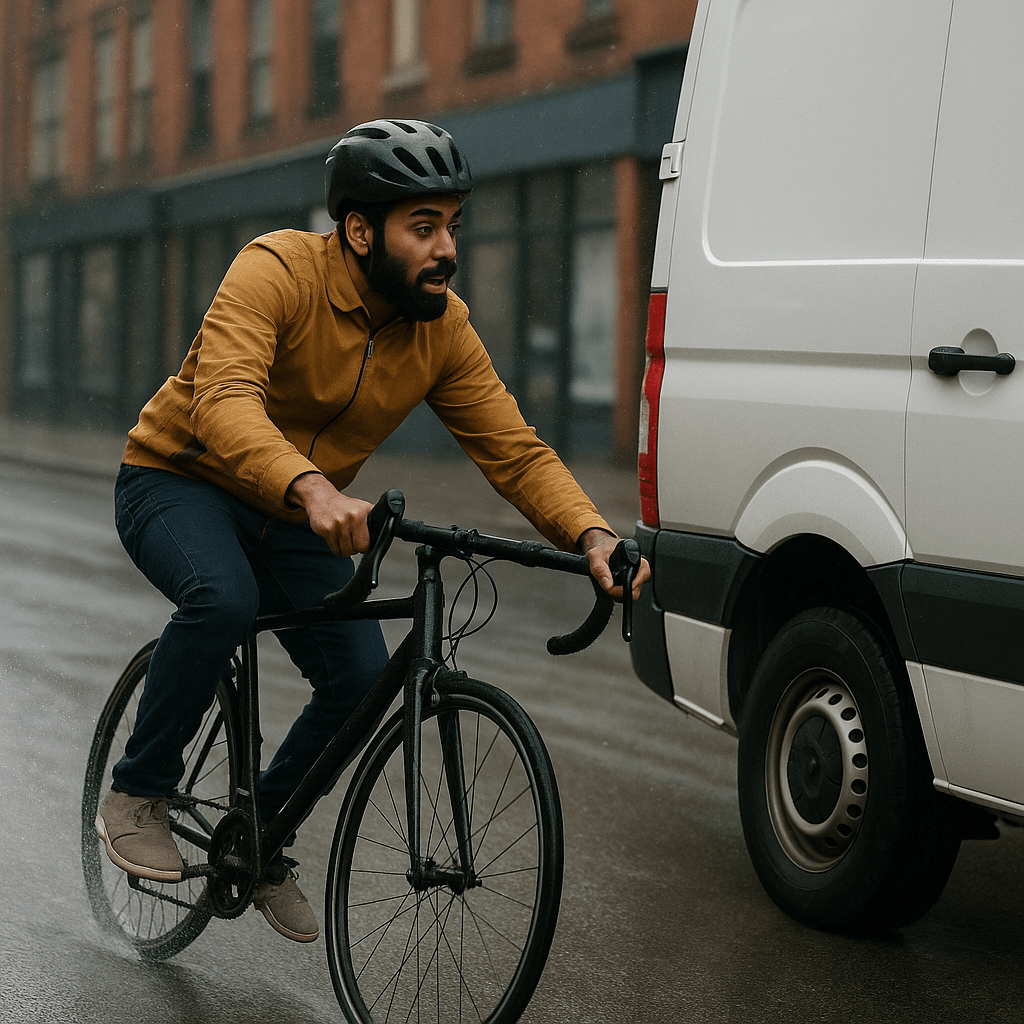
I cycle into work. It’s a rainy day. I’m going down a steep hill and brake hard behind a van that suddenly stops. I skid viciously and nearly fall off. I let go of the brakes and momentarily recover—only to realise I’m still hurtling towards a stationary van. I slam the brakes again, skid, and bobble around unflatteringly.

I stop an inch in front of the van.

Epic.

A puff of relief followed by a big grin across my face.


Tea, Rain and Managerial Puzzles

I arrive at work. Andy—the service manager—knocks on my door.

Andy: “Made a cup of tea for yourself, have you? Thanks!”
Me: “How many people are in this morning?”
Andy: “Six.”
Me: “So you want me to make six cups of tea this morning?”
Andy: “Yes, that would be nice.”
Me: “Right. Shall we block out my first patient appointment so I can do that instead? Anyway, are you OK?”
Andy: “Yes, thanks for doing all that paperwork last night. Mind you, it was in your tray so it’s your work.” 
He laughs really hard.
Me: “Right. No problem. All OK otherwise?”
Andy: “Yes. It’s good that it’s raining. I like the sun, but the Earth and the plants need water. So the rain doesn’t bother me. And my plants that I just planted.”
Me: “Yes, it is. Good for the plants. Thanks Andy. Have a good day.”

He, predictably, leaves me with a bewildered look on my face.

Andy is our service manager. Andy was the only manager until Jamie, the practice manager, arrived six months ago and stopped me from quitting a lot sooner.

Ideally, you want a manager who sorts things out and for whom nothing is too much trouble. Jamie is that. Andy is sweet—but definitely not that. If you ask Andy a question, you’ll get three back.


Jemma

Jemma, my first patient, has pelvic pain and abnormal bleeding. Her ultrasound shows adenomyosis—a condition where the womb lining grows into the muscle wall problematically. It often needs hormonal or surgical treatment.

We start with painkillers, and I refer her to Gynae. It’ll take months before she’s seen.


A Sticker Saves the Day

Gene, 3, comes in. Mum’s worried about croup. She’s lethargic and downbeat. Croup is a viral condition that can sometimes cause serious airway obstruction leading to a medical emergency.

The Westley Score helps assess severity. After examining her, the score is a reassuring zero. I give her a sticker. She bounces into life and suddenly becomes a chatterbox. She cracks me up.


Brian’s Bladder of Boredom

Brian, a new patient, came early for his appointment and has been waiting an hour. It can be a sign of boredom or loneliness.

After sorting the essentials, he tells me everything about his medical history. I notice my urge to end this consultation quickly, but remember how neglected our elderly are. I let him blather on for the remaining 7 minutes of his allocated time. Then he starts explaining how prostate operations work and I interrupt him and tell him:

“Right Brian, listen, time’s up—we’ll have to save your prostate tutorial for another time!” He bursts out laughing and takes the prompt promptly.

He’s still got his sense of humour—an excellent antidote to loneliness (which is an anagram of “one illness”– it sure is an illness).


MOIS Chemistry

We have a lunchtime meeting: Medicine Optimisation Incentive Scheme (MOIS). The aim is to improve prescribing habits.

Simon, our in-house pharmacist, and Katerina, leading the call, keep interrupting or disagreeing with each other. But sometimes they laugh together.

Confusing.

On our end, it’s me, Andy, and Nat (our other GP), on mute.

“Anyone else feel like there’s something going on between Simon and Katerina?
“Yep. there’s definitely something that needs to be released here.”
“Yep. I can’t quite figure out what the underlying emotion is.”
“Do you reckon they’re having an affair?”

The rest of our call is made far more interesting with observations on Simon and Katerina’s love-hate relationship.


Ruby

Ruby, a tall, blonde 40-year-old, comes in with six months of back pain. At the end of the consultation, she coyly asks:

Ruby: “Would diazepam help?”

Here we go. Diazepam is a muscle relaxant and more significantly, mind relaxant with a lot of addictive properties and side effects. 

Me: “Diazepam can help for acute back pain, not chronic pain so it’s not indicated.”
Ruby: “Yeah, but it feels sooo good.”
I chuckle.
Me: “I know it does. That’s the problem.”
Ruby: “Oh go on, Doctor.” 
She slaps me on the arm. Unbelievable.
Me: “Not a chance, Ruby.” I smile. “Off you go.”

I’ve survived a skid, a MOIS love triangle, and a Ruby ambush. The rain has stopped. Andy’s plants are thriving. And so am I?

🏚️ Diary of a GP 26: Claire and the Kingdom of Crackheads

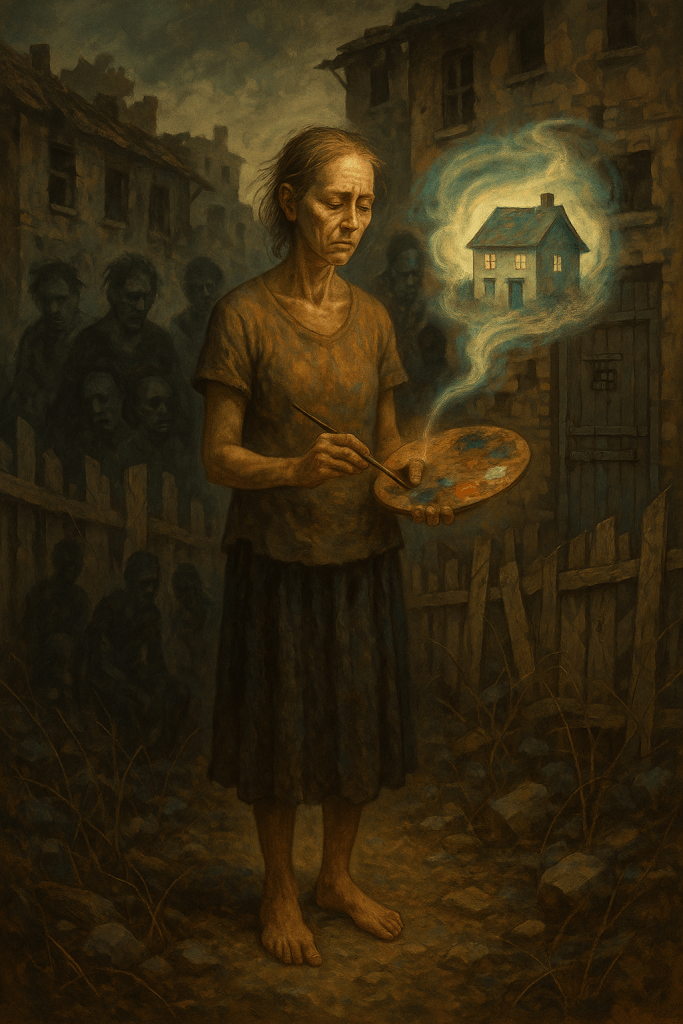
Claire is one of those patients who enters the room with a quiet whirlwind behind her. She doesn’t look chaotic—in fact, she looks composed. But tired. Tired in a way only someone surviving every day can be. Not dramatic. Not complaining. Just there, holding herself together with a kind smile, an antihistamine, and a palette of paints.

She lives in a terraced house that the council calls temporary accommodation, which is polite code for a social purgatory. No privacy. No dignity. No insulation. Everyone’s business is everyone’s business, and everyone is either watching you, borrowing your food and never returning it, or using the communal garden as a toilet.

Claire is surrounded by people who are unwell. Drug use, violence, shouting at walls at 3am. Not bad people—just broken. But when you’re already barely afloat yourself, it’s hard to keep handing out life jackets.

She tries though. Claire has tried helping. But they bite the hand that feeds them. She wants to trust those who can’t be trusted. She is the sort of woman who would give you her last fiver and then cry quietly later because it means no milk, no swim, and no escape from her own thoughts.

And swimming—well, that’s her passion. But her swimsuit is in storage, locked away by the council until she pays a debt she can’t afford. A swimsuit. A small piece of fabric held hostage while her mental health screams for mercy.

She came to see me because her skin was breaking out in angry welts. Urticaria, triggered by stress. She didn’t need me to tell her what was causing it. The story is all over her body. And her hair, which is now falling out.

Why? Because life has been one long cortisol surge since she fled her home in the neighbouring council. That’s where the sexual assault happened. A family friend, no less. A dangerous younger generation of the family. She can’t go back and she’s not told anyone. The place, the people, the trauma—it’s all tangled up in a threat she’s still running from. But our Council isn’t helping at all. She’s stuck in the very best accommodation available. The neighbouring Council she came from offers her better housing conditions, but she cannot go back to where the perpetrators run riot. Meanwhile, our Council raises its eyebrows, shrugs its shoulders, and drops another bureaucratic boulder on her chest.

She’s tried private landlords because she has some money. But the temporary accommodation address on her application marks her out as a red flag. “You’re in that place? Sorry love, no rooms at the inn.”

When you’re poor, vulnerable, and come from trauma, a part of the World doesn’t just close doors—it slams them, bolts them, and then lobs a penalty charge at the back of your head as you leave.

But Claire keeps painting. She has an art exhibit soon. Her work is an expression of her suffering—fractured yet lovely. 

Claire has fibromyalgia, alopecia, wheals, grief, and a council debt. She’s got friends who turn out not to be friends. She’s got strength that I don’t understand. And somehow she’s got this faint, flickering hope that one day she’ll get a clean, safe space with a locked front door and a fridge no one raids.

I’ve written letters. I’ve chased housing officers. I’ve handed her antihistamines and encouragement. But what she needs isn’t a diagnosis or a drug. She needs dignity. A place to belong, to get some peace, some rest, and time to heal.

Claire isn’t the problem. The society we’re letting evolve is. The fact that we put someone like her into a pit and then expect her to climb out, build a CV, charm a landlord, and smile through her trauma—that’s the madness. That’s the cruelty.

Diary of a GP 25: Finally Out of the Weeds

 Leadership Time — But Only After Resignation

After a year of firefighting, I’ve been handed the matchbox. Two months left. Let’s see what we can ignite.

I’ve finally been given protected leadership time — ironically, just weeks after submitting my resignation. This reflects a larger problem in our system: reactive leadership, not proactive.

Simon asked me if I might stay now – too little, too late. One of the key bosses has not met me in the 13 months I’ve worked for her – where is the teamwork? It’s been tough to work at the whim of those who lack capacity to self-develop or reflect – never again. But still, I’m looking forward to making some improvements in the remaining two months I have left here – not least, rebuilding a sense of teamwork and community. The meetings will be with Jamie, our excellent practice manager.


🧩 The Erosion of Community

Today we talk about how the erosion of community in modern life is leading to deprivation of a human need for meaningful connection and purpose. Without it, people lose happiness, fulfilment and health. This is no small issue. And we must nurture it in our working environment and consider how we can create community in our patient population.


 First Change — Prioritise Meetings and Management Time

First change — prioritise staff meetings and management time over delivery of service. Even if it means we have longer waits for patients to get the service they need. Short-term pain for long-term gain. Get the fortress in order.

We will now have 5-minute morning huddles to enable staff connection, teamwork and communication of daily issues. All good GP surgeries have morning huddles and regular meetings. Our regular meetings are cancelled frequently. So we’ve agreed that all meetings must go ahead irrespective of staff absence, there needs to be someone deputising and the meetings need to be fully attended.


🩺 Quality Improvement: Painkillers and the Role of the Pharmacist

Next — the regulator (CQC) inspection fed back on the lack of quality improvement projects and audits we have here. We have an excellent pharmacist, Simon, who will now develop a project on reducing the amount of painkiller prescriptions we issue (long-term addiction and tolerance are a real problem, so this needs constant policing as it really damages the population without proper oversight). The prime example of this is the American opioid (e.g. morphine, fentanyl, oxycodone) crisis which has resulted in drug misuse, addiction and death — affecting mostly young to middle-aged adults.


🧠 Assessing Leadership and Time Use: The Case of Helen

Next – we’re assessing Helen, the advanced nurse practitioner’s use of time. The clinics she is booking herself have so many wasted slots. This is usually a sign of someone overwhelmed. Furthermore, she has leadership time that needs transparency and structure. We need to support playing to her strengths to get her going, as she can be utilised better for all parties.

She’s also facing a complaint and isn’t engaging with any other people higher up in the organisation. Jamie was told, “I don’t have time to talk about this,” when he brought it up. It’s a real issue — she will be in breach of contract if she doesn’t follow the complaints process. I have a supervision meeting with her later, so will ask her to play ball. Everyone is walking on eggshells with her. But we do need to call a spade a spade.


🛠️ Finally, Space to Lead

It feels so good to finally step out of the weeds and into the architect’s chair — to strategise, make changes, and implement ideas. You can’t build a fortress while patching leaks with teabags and hope it holds.

Our system must once again place doctors with a vision for leadership at the helm of shaping it. There is no doubt about it.

Diary of a GP 24: Sitting Still and starting at screens— An antidote?

I signed up for an ultramarathon while I was in Scotland.

Technically, it just qualifies. It’s only about 5 miles longer than a marathon (26.2 miles).
By definition, anything beyond marathon distance counts as an ultramarathon — even if just barely.
Some ultras stretch into the hundreds of miles. There are even a couple over 1,000 miles.

But that’s not the point.

If I finish it, I get to say for the rest of my life: I’m an ultramarathon runner.
Minimum required distance, maximum reputational gain. Status. Accolades. Reverence. YES…

So why am I really doing it? Partly because I’m easily persuaded. Partly because living so much of life in the mind doesn’t feel normal — and I need to move my body. Plus I once saw a psychic and she told me I needed to run more… no joke. If a psychic tells you to run, who am I to argue with the spirit realm? Better to overdo it than under do it.

Modern life pulls us into stillness. Staring at screens. Thinking, planning, figuring out endlessly. But our ancestors moved. We were designed to move. To be in our bodies. To feel more, think less.

It’s hard in a society moulded around thinking and intellect. But reconnecting to our physical selves — our sensations, our breath, our limits — can be powerful. How? Movement. Mindful movement. Notice each step. The muscles that fire. The tension in the body. The rhythm of the breath— is it shallow? Deep? Effortless? Let the tension guide your pace. It might hurt for a while but eventually there’s a release and we find flow. For me, mindful movement helps to find that place of ease. It takes time but it’s a healing space to enter.

We weren’t designed to be predominantly thinking beings. Thinking, rationalising, intellectualising — they’re useful, but they’re just one part of being alive. Feeling, experiencing, imagining, creating — a different richness. One that has absorbs me more and more.

Yoga has been my usual embodied practice— but it’s been more of struggle to get on the mat lately. So I’ve taken my movement outside. It seems more fitting to move in the sun and nature. Yesterday, I ran 12km in the hills for the first time in a very long time. But the ego runs strong in me still and I overdid it. Today, I’m tired. Luckily, I get a lie in.

In the morning- I have a doctor’s appointment. They found a mass in my chest- all tests are reassuring- but they’re monitoring it. I emailed work to say I couldn’t make the morning session. But I had a feeling no one read it. A recurring frustration — being ignored.

I call up Andy, the service manager.
“Did you cancel my clinic?”
“No.”
Of course not. “Well you better do so.”

I go in after my doctors appointment. I’m drained, irritable, foggy. Not a great day for patience. Or patients. I go on autopilot until I get home. I was meant to come home and do a load of work in the evening but tonight’s not a creative night.
I put on Untouchable — a French film. Hilarious and life-affirming.

Just what I needed: Stillness and screen-staring.

Diary of a GP 23: Freecycle Friendships, Jazz, and Missed Connections

After the conference ended, I spent the rest of my weekend visiting old friends and old haunts in Glasgow. I lived in the Southside — vibrant, raw, full of diversity and creativity. Its wide range of cultures express themselves through delicious, unpretentious cafes and restaurants. In parts, the Southside borders on urban decay, but there’s an undeniable buzz and character that deeply charms.

The jazz scene is mind-blowing — having birthed artists such as Corto Alto, Fergus McCreadie, and the incredible collective Glitch 41, who put on monthly night shows at The Rum Shack (when I first saw Glitch, I needed help picking my jaw up off the floor).


Queens Park and Andy the Polymath

It was great going back to Queens Park in sunny weather — idling time away with friends on the slopes with a view of the city, strolling around the quiet parts of the forest or watching the insatiable mating attempts of bull pigeons by the big pond.

I stayed with my friend Andy, a fellow GP who works in remote accident and emergency departments on islands and in rural parts of Scotland. It’s work I used to do when I lived here— incredibly developmental and enriching for a GP, offering clinical breadth and autonomy that’s harder to find in England. Down south, the work is largely specialist-led, and this extended-practitioner skillset for GPs is underutilised. It’s a shame — I believe our generalist background is incredibly valuable in higher-acuity A&E environments. I do miss that work.

Andy is one of those special people we’re lucky to encounter in medicine. Not only is he capable of managing everything from piles to palliative care issues and heart failure to gunshot wounds, but he’s also an engineer by background. He has re-decorated, re-floored, and insulated his entire house — including building his own kitchen and bedroom wardrobes. On top of that, he constructed a music studio where he and his band practice, and he put together a large, impressive pen for the kids’ chickens. Goals. 

One of the joys of medicine: you get access to very inspirational, humble people like Andy.


Robbie, the Freecycle Friend

Then there’s my mate Robbie. A journalist in Glasgow, he’s produced radio shows for the BBC — particularly focused on food and drink rooted in Scottish culture. He’s fascinated by life: arts, food, drink, architecture, anthropology, politics, land management — you name it. He bakes his own bread, ferments kombucha, pickles all sorts, and forages significant amounts of his own food. I’ve no idea how he finds the time, but his generosity of spirit means you often benefit from his talents, not infrequently.

We met in unusual circumstances. He’s my Freecycle friend. I was giving away hair clippers because I needed to upgrade to ones that had an attachment for trimming ear and nose hair — the joys of approaching middle age.

We got chatting. He looked like a quintessential hipster, rocking up with his unbranded bike, neat beanie and wispy goatee. He looked like he knew a thing or two about the local area, and I was in the market for new friends having just moved to a new city. I grabbed his number after a nice chinwag and was quite excited at the prospect of a new friendship.

We texted a bit. When I saw Andy and his mate Jeremy in the pub, I told them I was quite excited about a new friend I’d met through Freecycle. I mentioned he was a food journalist. Jeremy clocked it immediately — it was Robbie. He already knew him, and added: “I met him at a kids party and he was juggling.” Turns out he’s also circus trained.

“Wait, this is great. Let’s see if we can mess with his head. What does Robbie like?” I schemed.

He likes organic wine, used to live in Guadeloupe, and loves foraging,” said Jeremy.

“Perfect.”

I immediately texted Robbie:

“Hi Robbie, since I’ve moved here, I haven’t managed to scratch an itch of mine. You don’t happen to know anyone who knows a thing or two about organic wines and could recommend a shop?”

Immediately he replied:

“Am I that much of a hipster stereotype?” And then he recommended three shops.

I responded:

“Next you’re going to tell me you used to live in Guadeloupe and love foraging.”

Confused expletives followed before I sent him a smug photo of Jeremy… and the friendship was borne.


The Blonde on the Plane

It was wonderful to go back and see the old clan — to experience the humility, warmth, and iconic craic of Glasgow.

As I got on the plane, I sat down and across the aisle, made eye contact with a pretty blonde woman — we smiled at each other.

Hmmm.

I worked on the plane, but as we landed and started to disembark, I noticed her again. There was a sweetness about her. She walked ahead, and I thought to myself — maybe I can find a way to start a conversation.

I caught up as we walked toward the exit, levelled beside her, looked over — and then bottled it. Walked past.

F*ck. Never mind.

I waited for my suitcase. She stood on the opposite side of the luggage carousel. Assuming the opportunity had passed, I grabbed my bag when it arrived and walked out. But just then, hers arrived too — and she came to stand right beside me.

SAY SOMETHING, YOU PANSY.

She looked like she’d been hiking, and her hat said something about trails.
“How was your hiking?” I blurted out.

She looked at me, squinted slightly, then responded warmly. The conversation went well. I could tell she was examining me, but she was open. She told me she’d signed up for a trail marathon. I said I’d just signed up for an event too. There was immediate chemistry.

It turned out she’s a two-time author, podcaster, life coach — an evidently talented human being. And gorgeous.

We exchanged details.

There’s a catch (always!!): she lives in America. I’ll still message her. 

At the very least, a lovely interaction to draw to a close another fine Scottish adventure.

Haste ye back, old friend.

Diary of a GP 22: What GPs Are Fighting For — Stories, Systems, and the Sticking Points

The real heart of the BMA LMC GP UK (enough acronyms to obscure meaning?) conference lay in the issues debated — motions that touched everything from clinical ethics to working conditions to the future of how we practise medicine.

Here’s a glimpse into some of the motions that sparked the most debate — and why they matter.


💊 When Patient Safety Meets Systemic Chaos

A motion was proposed for an urgent and thorough review of prescribing practices around weight loss medications like Ozempic, Wegovy, and Mounjaro. These drugs have become the latest craze with celebrities and members of the public — and often not for the right reasons. 

Many private prescribers operate outside of national guidelines, with requests landing in GPs’ inboxes to take over the prescriptions, monitor side effects, and — in effect — carry the legal risk. There are troubling reports of these medications being prescribed to:

  • Non-obese patients
  • Individuals with eating disorders
  • Minors under 16
  • People who not infrequently end up in A&E with complications

Meanwhile, unregulated online prescribing platforms are bypassing essential safeguards like in-person assessments and comprehensive medical histories. One of the more debated “littles” in the motion was whether to launch a public awareness campaign about the risks of this type of prescribing. The concern is that those in need of the medication would be deterred by such a campaign. Irrespective, the challenge of handling poor prescribing habits often lands at the door of GPs.

“It’s like being handed a lit firework and being asked to ‘just hold it for a second’… while the one who lit it walks away. Repeatedly.”


🏥 Passing the Buck from Secondary Care

Another motion tackled the growing frustration around secondary care prescribing requests — where GPs are asked to prescribe medications on behalf of hospital specialists or nurses who can’t prescribe, or to order investigations that hospital teams should be managing themselves.

The tension is obvious: say yes, and GPs are left carrying responsibilities that aren’t theirs. Say no, and patients suffer. The motion passed with strong support to push back on this creeping shift of responsibility. Throw the fireworks back, essentially!


🏥 Private Providers and Unequal Care

A third motion called attention to private provider prescribing arrangements — and the concern that these can be unsafe, unsustainable, and widen health inequalities. It urged GPC UK to adopt a firm stance against such arrangements.

However, arguments against the motion pointed out that some private shared care works well, especially for patients stuck in limbo within the overstretched NHS. Those suffering from long COVID, or patients who simply can’t access NHS services, often turn to private providers out of desperation.

It’s a messy reality: when people feel abandoned by the system, they’ll look for care wherever they can get it.


⚖️ Ethics, Autonomy, and Assisted Dying

One of the most charged and respectful debates was around a motion on assisted dying, following the proposed Bill to allow terminally ill adults in the UK to request medical assistance to end their life.

The motion called for GPs not to be compelled to participate in assisted dying, and urged that such work be carried out by dedicated, separately funded services, so that it does not compromise existing care or GP capacity.

The debate acknowledged a deep unease: that laws allowing clinicians to end life — even compassionately — fundamentally alter the doctor–patient relationship. 

Speakers pointed to examples from countries like Canada, Belgium, and the Netherlands, where eligibility criteria have quickly expanded over time to include:

  • Chronic pain sufferers
  • Mental illness
  • Even social factors like homelessness and isolation (in some reports)

There’s something profoundly precarious about legislating the boundaries of life and death — and the doctors will inevitably get caught in between.


🤖 Tech, Data, and the Line Between Help and Harm

Another motion highlighted concerns around the hasty adoption of AI in General Practice. While automation might promise efficiency, there’s a risk of misusing it and data breaches. 

A separate motion debated whether GPs should remain data controllers of their patients’ records — a role that carries legal and administrative responsibility. While some argued it creates undue liability, most agreed the risks of handing over data control to central government or third-party entities were far greater (using it for political or commercially-driven purposes). We’ll hold on to this firework… definitely don’t let the children be in charge of them!

“People trust their GP, not the algorithm. And definitely not the policy brief it was built on.”


🌍 Fairness and the Forgotten

Perhaps the most morally resonant motion came from Northern Ireland, calling for a reversal of recent BMA policy that prioritises UK medical graduates for training places over International Medical Graduates (IMGs) opportunities — a policy that rubs salt into an already raw wound.

The debate was laced with painful accounts of the discrimination and hardship IMGs endure just to practise in this country. It was not without opposition, but this was respectful. However, these are the very doctors who keep the wheels turning in overstretched, overlooked areas — often in places others simply won’t go, like the far reaches of Northern Ireland. 

To frame this as a matter of “protecting our own” misses the point entirely: these colleagues are our own. They’ve jumped through bureaucratic hoops, paid dearly, and stepped up when the system is gasping for help. To deny them equal opportunities to train and grow — after inviting them in and relying on them is short-sighted, ungrateful, and out of tune with the values the profession claims to uphold. The motion was convincingly backed.

“If we invite people into the house, hand them the keys, and then lock the fridge — what kind of host does that make us?”


🔚 Closing Reflection

The conference may not have the dazzling skies of bonfire night and reading motions might sound like wading through policy soup — but in that Glasgow hall, these debates were anything but dry. They were alive with colour from personal stories, ethical tension, and professional grit. And it was laced with wit.

Every motion brought a choice point: what kind of system are we building, and who are we building it for?

I’m still uncertain about my next steps in the short or even medium term — but what this conference made clear is that I want to be part of this community for the long haul. I want to contribute to shaping the system, not just as a critic on the sidelines, but by lending my voice and energy to the process itself. 

Diary of a GP 21: Glasgow, General Practice and the Unexpected Stirring

I arrived at the conference with low expectations. Honestly, I wasn’t chasing inspiration — I was chasing a catch-up with my friend Stephen, a fellow GP with a leadership role. The fact that it was in Glasgow — my old stomping ground — made it an easy yes.

I’ve worked in national-level leadership before, but over time, a quiet apathy from working in a tough system has settled in. With the isolated nature of day-to-day work as a GP, this disconnect has perhaps also spilled over into how I felt about the profession as a whole.

But—unexpectedly—the conference stirred something in me. It was sharp, emotional, and energising and I left feeling proud of the GP profession. From the very beginning, the tone resonated. Dr Matt Mayer, the chair, introduced the conference with a disarming wit and set the wheels in motion for a 2 day affair that ran with the pragmatic efficiency hoped for from a resource-constrained system.


What Even Is the LMC Conference?

The BMA (our main trade union and professional body representing doctors) UK conference for Local Medical Committees (LMCs) is a yearly affair bringing together over 500 representative GPs across all four nations. It has a fascinating, engaging format for member-led decision-making and active participation.

LMCs are committees of area-specific GPs that represent our interests to NHS bodies such as NHS England or local Integrated Care Boards (ICBs). The number of organisations involved in the NHS is confusing—and, helpfully, every few years most of them like to change names and structures too. It’s a bit like keeping tabs on a herd of migrating, camouflaging, hibernating, fast-reproducing, short-living creatures.

The conference is an opportunity for these GP-comprising LMCs to raise issues relevant across the UK and influence national BMA policy—to protect the interests of GPs, patients, and the wider system.


Motions, ‘Littles’, and the Art of Debate

LMCs submit motions to the national BMA conference committee, which selects those to be debated before any policy changes occur. Each motion is made up of ‘littles’—specific, focused points that form the building blocks of a broader argument.

The motion and its littles are proposed by a GP speaking on behalf of their LMC, often delivering an impassioned 5-minute speech. GPs from the audience then have the opportunity to speak for or against the motion (or any of the littles) in one-minute slots. Many suggest amendments, while others support or oppose outright. Some motions—such as those on assisted dying or transgender legislation—sparked emotionally charged, polarised debate. For the most part, the tone was deeply sensitive, passionate, and respectful. And at times, invaluably, sprinkled with playfulness.

The chairs of the conference allowed time extensions for important debates and hurried things along when needed. After concluding statements and clarifications, the broader motion and its components were voted on. For routine matters, we voted by raising green or red cards. But for sensitive topics, such as discrimination against International Medical Graduates, digital voting protected anonymity.


The GP Workforce Crisis: Hard Truths

One of the most urgent, eye-opening, and emotive topics on the first day was the GP workforce crisis—a result of decades of underfunding and poor workforce planning.

Patients are finding it increasingly difficult to access GP appointments, yet GPs face unprecedented levels of unemployment. The government’s strategy has shifted toward ‘GP-lite’ models, funnelling funding into the Additional Roles Reimbursement Scheme (ARRS). This approach aims to delegate traditional GP work to Clinical Pharmacists, Social Prescribers, Physician Associates, Paramedics, and Advanced Nurse Practitioners— essentially offloading doctors work onto non-doctors. Ironically, GPs are still required to supervise these practitioners.

I believe in system evolution. When ARRS roles are used to support GPs by offloading work that can safely be done by non-doctoring professionals, they’re helpful. But when implemented as a substitute for the complex, relational work that GPs do—it’s a disaster. It’s causing stress for patients, non-GP staff, GPs themselves, and the broader system.

Our own Advanced Nurse Practitioner, Claire, has expressed concern about the risks of managing patients who really need to see a GP. She’s raised this repeatedly. (Although admittedly, complaining is her modus operandi).  


What Struck Me Most: Raw Stories of Struggle

A host of remarkable stories were shared by GPs—personal accounts of how this broken system is affecting lives:

  • GPs struggling to pay bills and mortgages, taking jobs as Uber or bus drivers
  • An anonymous GP staying in an unhappy marriage due to financial insecurity and joblessness
  • GPs earning less than they did as junior doctors two years ago
  • A charity, the Cameron Fund, stepping in to support GPs financially
  • GPs offering to work for free just to keep their license valid (40 sessions required yearly)
  • GPs commuting several hours to secure work
  • A GP leaving their family behind in the UK to emigrate to Canada for stability

And even for those GPs who do have work, things aren’t rosy. A BMA report summarised current pressures:

  • Declining GP numbers and rising patient lists = worsening GP:patient ratios
  • Burnout
  • Poor continuity of care (which remains the most evidence-backed predictor of good patient outcomes)
  • Substitution of GP care with less-qualified staff, increasing both cost and risk to the system

The Mental Health Cost of Carrying It All

There was a particularly moving session on the mental health of GPs. A motion was proposed calling for dedicated, confidential mental health and wellbeing services for primary care staff.

Burnout levels in General Practice have reached Kilimanjaro-like heights. Harrowing stories emerged—of mistakes made under pressure, guilt that lingered, and preventable suicides. There are tragic cases, such as that of Dr Gail Milligan, who took her own life despite actively seeking mental health support.

The support structures for GPs who are crumbling under clinical pressure, admin burden, regulatory oversight, complaints, and staff shortages? They’re not fit for purpose. This motion aimed to change that.


A Closing Note, and a Ceilidh

This wasn’t exactly what you hope to hear three days after handing in your resignation to step back from the chaos. It also surprised me — not because it wasn’t significant, but because hardly anyone seemed to be talking about it. So much for “no news is good news” — sometimes, no news is just… quietly buried’

But these times—this mess—we’re in are part of the natural rhythm of systems. An endless flux between order and chaos, abundance and scarcity, creation and destruction.

“Hard times create strong people, strong people create good times, good times create weak people, and weak people create hard times.”

And within these hard times? There is still strength, creativity, and courage. This conference proved that. Compassion, kindness, fervour, and connection were abundant.

That night, we had dinner at the Glasgow Science Centre. I found myself seated between two wildly innovative GPs. On one side was Cassie, who’d just completed a 20-something-hour kayaking race with a broken wrist. She also happened to be involved in projects like delivering chemotherapy by drone to remote parts of the UK. On the other side was Suresh — a man who had taken over six failing GP surgeries in an attempt to turn them around. He explained that he was currently sleeping just four hours a night as part of an experiment… preparing, as he put it, “for when it might be necessary.”  I wasn’t sure whether to be inspired or start doing push-ups under the table.

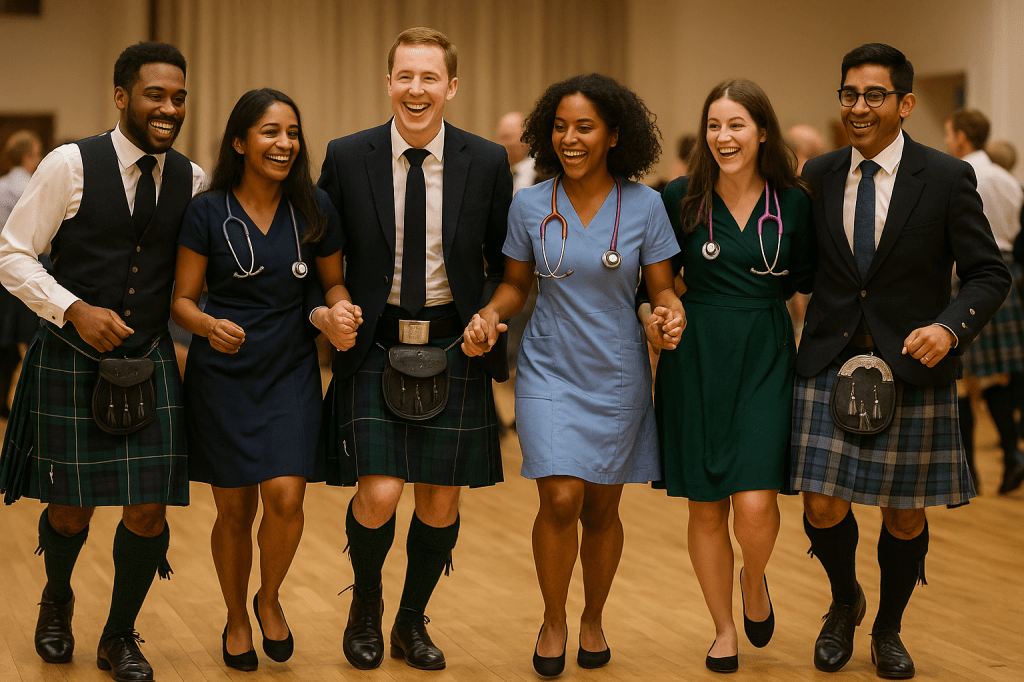
Later, Glasgow’s musical talent lit up the floor, delivering a hell of a Ceilidh. All four nations of GPs—laughing, dancing, and drinking the chaos away.

Diary of a GP 20: Mental Toughness Has a Time Limit

I wake up and lie in bed. Can’t bring myself to get up and do anything useful. Decide to get my phone and scroll. Un-mindful medic.

Eventually I contemplate if I can even be bothered to cycle into work.

I hear David Goggins’ voice:

“The only way you gain mental toughness is to do things you’re not happy doing.”
“Pain unlocks a secret doorway in the mind, one that leads to both peak performance and beautiful silence.”

Better get on me frigging bike then.

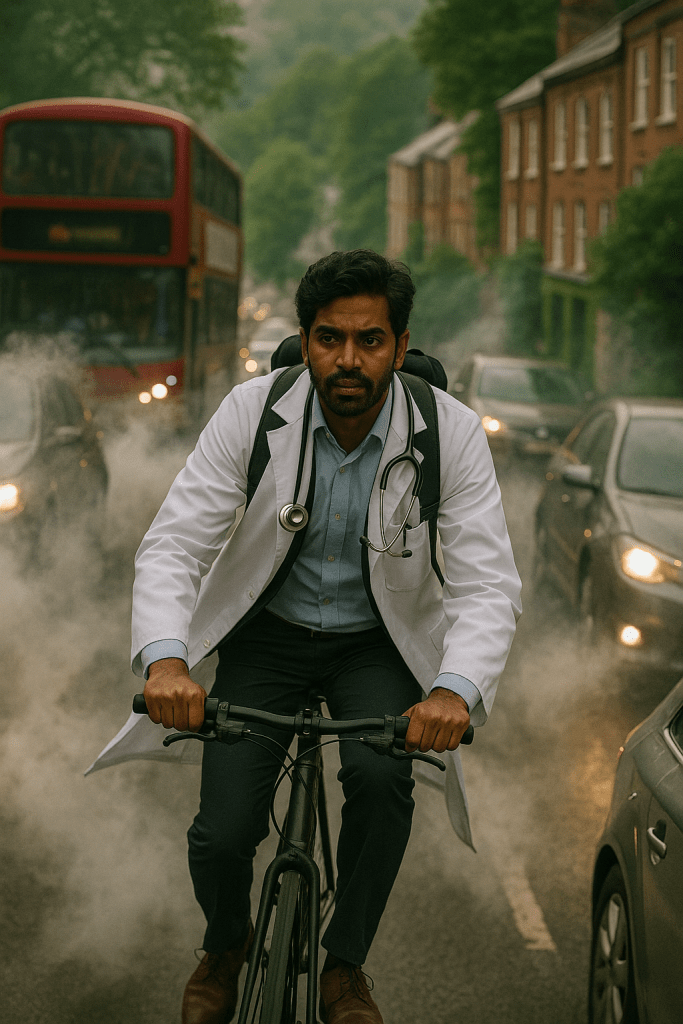
As I cycle in, there is the most amount of traffic I have seen in a long time. Not only that, there are random blockages—like a lorry in the middle of the road emptying industrial-sized bins, with cars literally driving on the pavement to try and get around it more quickly.

I chuckle as I nip past it. “To David Goggins,” I mutter to myself.

I arrive and say hello to reception—they’ve obviously heard I’m leaving, as they’re acting weird. No time to address the elephant in the room though. I leave them with the elephant and head to my room for clinic.


Today I see Jake again, first time in a while. I see from his psych letters he’s had a diagnosis of autism confirmed, and paranoid anxiety, for which he’s been started on sedating antipsychotics.

I learn of his childhood—his father left when he was four years old, and his mother was left homeless. They were sofa surfing for years. He was bullied his whole life because of his fractured skull birth deformity. They called him “subnormal,” and he struggled with being different and having low confidence. Ever since then, he has always been paranoid about what people think of him. He has felt life has not been worth living since he was eight. He left his mum when he was 16 and moved into a house full of drug users, who told him that as a bloke you should shut up, get on with things and never ask for help. That’s when he started self-medicating with booze.

Recently, he has been accused of being a paedophile because of the way he looks, and was assaulted because of this, apparently. His paranoia has become worse, and sometimes he has binges with multiple bottles of spirits in a day.

He’s been doing well off the booze lately. He’s always been fascinated by facts and learning things—biomedicine, botany, human anatomy, psychology—and he can retain information easily. He’s also studied woodwork, metal work, and scrapping. Of some concern, he does also know how to make explosives. He finds he becomes obsessed with learning one topic before moving on to the next.

Jake sees, in the periphery of his vision, a figure he describes as “death knocking on the door,” who disappears when he looks at him. He says he has to accept that something in his brain is not functioning normally. He believes he will never feel worthy and will always worry about what others think. He also says he doesn’t want to be alive—but when he is sober, this is not something he would act on. And yet, reassuringly, he also sees his life as a spiritual war that he must keep going with.

“Jake, I know you worry about what other people think, but do you think it is realistic to think that everyone in the world will like you? For the record, I think you are an incredible human being. Your story to getting here is both painful and inspiring. Yes, you have your demons—but so do we all. Despite all your lifelong adversity, you remain a fundamentally kind, incredibly caring, good person with talent that cannot be muted. I truly mean it, and I don’t say it lightly.”

On his way out he asks for a foodbank referral- I will arrange this but warn him there’s a waiting list.


At lunchtime, the manager, Jamie, pops in and I explain my situation to him and why I want to leave. I explain that he is one of the reasons why I have stayed so long, and that I do have a fondness for the practice, but I just can’t see how it’s going to work long-term for me.

“I know this must come as a surprise to you,” I repeat, as I did to Ritu.

He looks at me comically. “Not really.” Same response as Ritu. He chuckles. Jamie gets it. He feels the same—we are working with no freedom to make quick decisions needed to improve things. It is stifling and frustrating. And we are not listened to.

More validation.

I speak with Ritu at lunch. She seems a bit sheepish. Management have declined my request to reduce my hours, but they have agreed to give me leadership time starting ASAP. I think she’s unsure how I’ll respond. I don’t give much away—I’m happy I might be able to change things around here for my notice period, but it still doesn’t change the fact I want to reduce my hours and probably leave.

“The only way you gain mental toughness is to do things you’re not happy doing.”
I think this needs a timeframe caveat, David. And my timeframe feels like it’s almost up.


This weekend, I’m shooting up to Scotland again—this time for a UK-wide GP conference on British Medical Association (our union) policy. My expectation is that it will be dry as hell, but it’s in Glasgow where I used to live, so I can see old friends, my best mate is going, and part of me knows I need to engage with processes that ignite change: something we are in need of.

Maybe what I’m looking for isn’t policy change, but permission to start again.

Diary of a GP 19: Scotland’s Clarity, Preferably, Helpfully

Arrival in Inverness

I arrive in Inverness and the moment I step off the plane, a palpable weight lifts from my shoulders.

A few steps further and a man cracks a joke about the weather. It’s cooler for sure. But also satisfyingly crispy, like a praline wafer. He’s from Stornoway, of the Outer Hebrides, where I lived for two years. He’s with a friend—they’ve been at Buckingham Palace for a cancer event with the King.

We discuss the isle of Lewis and Harris and all the familiar spots I used to love, including Tiumpian Head, the lighthouse where I found myself idling time away, whale-watching with local friends during the pandemic (we were some of the lucky ones). He has that familiar twinkle in his eye of a Lewis man. Hardy, self-sufficient yet playful. Both of them have that quintessential islander openness and keenness for a playful natter. Strangers are not dangers to them.


South of England & Lost Connections

I never realised how withdrawn, separate and disconnected the culture of the South of England is until I left it five years ago and came up to Scotland, and travelled extensively. It’s progressing too—community is being eroded even more. And with phones, people are turning ever more inward. Between 1985 and 1994, one study showed community organisations fell by 45%.

On the plane, I was reading Lost Connections by Johann Hari. It describes how depression is often not a disease of the mind as many believe, but rather that it’s rooted in disconnection. Disconnection from purpose, disconnection from others, disconnection from self and emotions. And nature. Healthy communities, having down time and spending time outdoors are protective against depression.


Loneliness & Its Consequences

A lonely person spots potential danger in half the time a socially connected person does. They unconsciously know that no one else is looking out for them. They don’t have a tribe. That doesn’t mean that danger is there though, just that they are less trusting and more anxious. They take offence when offence isn’t intended. They judge more. They shut themselves off from the very thing they need mostconnection.

The tragedy is lonely people become harder to be around, perpetuating the cycle, as they snowball into an even colder place. It can be reversed, but through a lot more reassurance and love than they would have needed in the first place.

They become more physically unwell too—lonely people are three times more likely to catch a cold than a socially connected person, and a nine-year study demonstrated they’re 2–3 times more likely to die.


The Medicine People Need

At work, I see so much loneliness. People need lives more conducive to connection more than medicine. But our society values individualism over community, competition over collaboration, efficiency/scalability over soul and creativity, certainty/planning over uncertainty/flow. And people are becoming ill because of its rigidity.

When I lived in the Outer Hebrides, I was part of a community and connected to nature. People nattered. People created and shared for the sake of creating and sharing, not for money. It was a nice blend of social capitalism. Purpose is borne out of their community as people have roles to play for others in it.

When I lived there, I wasn’t so immersed in individual problems, financial pressure or personal goals.

Currently it feels like the living equivalent of battery–vs–organic farming.


Fires, Friends and Forests

I spend the weekend with friends Jimmy and Kass, and their little one Muireann. We camp out on the beach of the Moray Firth. We amble the forest bed picking up loose wood to top up our campfire before heating up and gorging on our Hebridean tradition: slow-braised homemade venison casserole.

In the morning, after clambering out of our tents from cold, interrupted sleep with the help of a strong coffee, we rise up to a view of gannets diving for their morning fish feast. We join them for an ice-cold dip. Invigorated, we stroll the beach and discover a 2m washed-up dead skate fish. We hike in the Cairngorms in Lord of the Rings’ scenery. We run a local trail along the River Findhorn, spotting a few spring salmon along the way. The immersion in nature and connection with old friends soothes my bubbling pot of thoughts and emotions.


The Way of the Hermit

Jimmy and Kass gift me a book: The Way of the Hermit by Ken Smith.

I watched a special movie on his way of life a couple of years ago. Ken let go of mainstream society to live off the grid as a ‘hermit.’ Inspired by his character, I made my final trip before I left Scotland a solo hike overnight to Loch Treig where he lives. I read the prologue of his book which finishes with:

“I’ve spent the majority of my life living outside of the conventions of mainstream society, and I’ll tell you what I think is weird, and it ain’t the hermit.

It’s how entire generations of people have been conned into believing that there is only one way to live and that’s on the grid, in deepening debt, working on products you’ll probably never use, to line the pockets of people you’ll never meet, just so you might be able to get enough money together to buy a load of scrap you don’t need, or if you’re lucky, have a holiday that takes you to a place, like where I live, for a week of the happiness I feel every day. And then they have the bloody cheek to guilt you into somehow being grateful for it?

No, I’m pretty certain I’m not the weird one, and yet here we are my friends.”


Resignation

I haven’t heard anything back from work about my request to reduce my hours—their communication is always painfully slow and drawn out. Enough. Ken Smith’s illuminating passage drives me to formally write in my resignation notice for three months’ time. Things must be more on my terms now.

I formally state my last day of work: 31st July. I ask for reduced hours and protected time during the notice period I am working if they want me to consider staying on. If they agree, I’ll use the next three months as a trial but will only need to give a further months’ notice if it doesn’t work out.

This week I read that satisfaction for GPs in NHS practices working under a private provider is between 9–22%. Realistically, I cannot see myself staying there long-term but Scotland helps unpick my inner conflict:

I want to leave. But preferably, helpfully.