Frontline Receptionist: The View from the Other Side
It’s both important—and humbling—to spend time in other people’s shoes. This morning, the service manager, Andy, asked me to start the day on reception—to feel the heat where it often burns brightest.
Patients treat receptionists very differently to doctors. Probably because we hold the keys to the good stuff—appointments, solutions, DRUGS.
Courtney’s Call
My very first call:
30-year-old Courtney says the pharmacy haven’t issued her asthma medication properly. She needs her Uniphyllin by tonight as she’s run out—along with two other medications. She says she’ll end up in A&E without it. Sounds dramatic, but could be true.
I check: we issued the correct script 10 days ago, covering a full month’s supply. She insists the pharmacy only gave her a small amount. I mute the call and check with Jemima, the receptionist, on the process. I explain that the pharmacy have charged us the full whack for the prescription and ask if she can double check what’s happened when she next picks up a prescription—which we can re-issue once she submits a written or email request.
As a one-off, I text her a quick link to facilitate the process.
She kicks off:
“I can’t do it. It’s your fault. Just sort it out now for me.”
“Unfortunately, we can’t issue it—it needs to go to the doctors, who will do it when they have time. They’re with patients.”
(She doesn’t know I’m an undercover GP acting as a receptionist.)
“My husband is in hospital. I don’t have time to f*cking do it!”* she spits, viciously.
“OK, sorry—that sounds stressful. Unfortunately, this is the only way it can be done. It’ll literally take 2 seconds. Just click the link and write which medications you need.”
The pot is boiling.
“I can’t do it. If I don’t get this medication by tonight, I’ll go to hospital and die. And it’ll be YOUR fault. You’re disgraceful.”
I try to stay calm, composed.
“I’m not trying to be difficult, I’m trying to help—we have a simple process. It’s not hard to do. And it’s the only way we do it.”
“You are disgusting. I hate you. I’m speaking to PALS (Patient Advisory Liaison Service). I will sue you for every penny. I hate you. F*cking DIE. F*ck you.”
It’s jarring to be spoken to like this — with little warning, and out of no personal fault. It makes me realise the privilege I generally have.
A few minutes later, she writes on her request form:
“You are disgusting. I need this sorted. I will sue you for every penny. I am going to PALS. I don’t have time to make requests so that I don’t die.”
Then… she requests her medication.
Aftermath and Reflection
Wow. I look through her notes for any justification. Her asthma has been stable for a long time. We’ll give her some slack—she may well have a husband in hospital. The loudest anger often belongs to the loneliest heart.
She’ll receive a formal warning. But any more rudeness won’t be tolerated.
I ask Jemima how often this happens.
“Sometimes once a fortnight, sometimes multiple times a week.”
A real insight. NHS Receptionists are taking a complete battering up and down the UK, in a totally broken system. Back to GP life.
Jane: Seen but Unseen
Jane, 78, comes in with an odour like she’s hiked the length of the UK. She also looks like she’s run it—limping in with a walking stick.
About a month ago, I sent her to A&E with a high index of suspicion for degenerative cervical myelopathy—a medical emergency where a spinal disc bulge in the neck becomes so pronounced it compresses the spinal cord, causing neurological symptoms and pain. She was close to going straight in for an operation but they discharged her and she’s got worse in the meantime.
Her neurosurgery outpatient appointment is on Friday.
She underplays her symptoms. The smell tells its own story—of someone struggling to care for herself; someone struggling to be seen. I advise her to exaggerate her symptoms at the appointment. She who shouts loudest, gets heard—especially in times of crisis.
The Call with Ritu
At lunch, I speak with my clinical supervisor, Ritu—an experienced GP in a leadership role and also a practicing GP at another site.
I’d arranged the call to ask about reducing my hours. But the conversation evolves.
I explain the pressures—both in and out of work. I’ve been working on a passion project that’s making a big impact on people’s wellbeing. But it’s based in London, and I often drive long distances. My friends, family, and business partner are all there.
Juggling work pressures alone is tough because of systematic issues in the NHS, the organisation, and the practice. Throw in the travel and the side project, and I’ve been left on the edge of burnout—racing heart, chest discomfort, irritability. I don’t look forward to coming in.
I tell her I can’t see myself here long-term. The job hasn’t matched what was promised. It’s felt like I’m a junior doctor, swaying at the whim of incommunicative, labile management decisions—people I haven’t even met in a year.
I’ve had no real opportunity to influence or leave my mark. The whole place has felt like chaos.
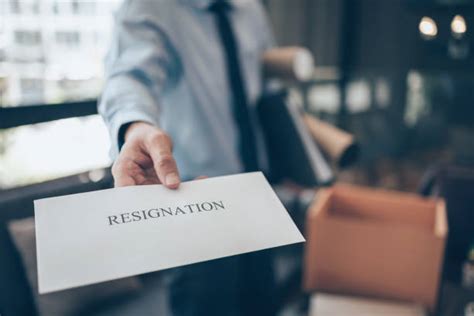
I tell her that despite this I really respect her. She’s been caught between a rock and a hard place. It’s no reflection on her—but I want to hand in my resignation.
“I know this must come as a surprise to you.”
There’s a silence. Then she speaks.
“Not really. I’ve been around the NHS long enough to know these things happen. Sadly, General Practice is more often than not just a job these days. It wasn’t always like that. But if you have a passion, follow it. And I get it—you’ve done incredibly well there under a lot of pressure. I’ll support your transition however you need. And if there’s any way we can change your mind, let me know, because we’ll miss you terribly. Have a think, get back to me before writing a formal resignation. But do what’s right for you. I get it.”
She validates my experience. I’m touched by her response.
There’s relief—but also a sense of leaving something unfinished. We’ve come a long way. Patient feedback shows a steep rise in satisfaction.
There’s a slight internal conflict.
George and Max
George, an old boy, comes in.
A scan—ordered due to blood in his urine—shows advanced cirrhosis. His liver is failing. That means less protein, more fluid build-up, and a higher risk of bleeding. His legs, thighs, and abdomen are filled with fluid. He’s bleeding into his urine too.
It’s likely a late-stage, palliative situation, though I can’t say for certain. I refer him urgently to hospital for a drain and full work-up.
Max is new to our clinic, having just moved down from London. She’s sweet. Autistic. Arrives with a formal demeanour, keen to update her NHS records—she’s changed her name from Ona to Max, which caused two NHS accounts to be created.
She also wants reassurance that her gender transition from male to female can be supported and managed locally.
Once reassured, a weight is palpably lifted and she lightens. She tells me excitedly she’s planning to join a transgender running club and get super fit. She’s just moved to the area and is buzzing.
A Difficult Decision
After work, I mull things over.
I like the patient demographic. It’s colourful. They need support. We’re doing a good job—far better than before. The practice manager we’ve had for the last six months is excellent. AI is coming in to help alleviate administrative burden. Medical students too—which I’m excited to teach.
But there are too many issues with the organisation and its processes. None of us can fix them without decentralising decision-making from the top—or protected time to lead change.
It’s going to be hard on staff and patients if I leave. Without sounding like I’ve developed a God complex. Well—maybe there’s a bit of a God complex in there.
I mean, if I left and things got better without me, it would slightly crush me. No one wants to leave a key role and see things improve, do they? Ideally, you want to see the place completely crash and burn.
Keeping the Door Ajar
I decide to leave the door ajar slightly.
I text Ritu:
How about a trial period—reduced hours and protected leadership time for three months? Not saying I’ll take it, but it gives me something to weigh up before I resign formally.
She immediately replies:
“Leave it with me, I’ll speak to the bosses.”
Off to the Highlands
Tomorrow, I’m off for nature therapy in Scotland and to hang out with my newly elected Goddaughter.
A chance to breathe, before I decide whether to walk away fully.
 Mindful Medic